For 36 years, the Joint Technical Liaison Meeting (JTLM) has helped provide product compliance professionals in the non-road equipment manufacturing industry with the requisite knowledge they need to help their organizations maintain market access around the world.
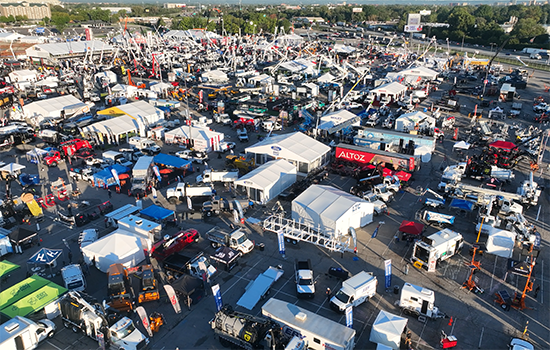
AEM was proud to host the 2026 edition of the event, held June 2-4, in Dallas, Texas, which offered an in-person forum for various trade associations to share their thoughts and perspectives on issues of common concern for non-road equipment manufacturers and “compare notes” regarding standards and regulatory activities happening in their respective regions.
What follows is the second in a four-part series of AEM Industry Advisor articles that highlight some of the key details of presentations and discussions from the 36th edition of the JTLM. Read the full PDF and Part 1 of the JTLM article series to gain a comprehensive look at the industry issues covered at last month’s JTLM.
Japan
CEMA Regulatory Update
Japan’s MLIT certification program recognizes construction machinery that meets fuel-efficiency standards and, while voluntary, is becoming commercially important through public procurement. The 2030 standards take effect in April 2027 for specified hydraulic excavators, bulldozers, and wheel loaders, and MLIT’s decarbonization plan generally favors certified hydraulic excavators for directly managed civil engineering projects.
Japan Automation and Autonomous Construction Equipment
Japan is developing safety measures, standards, guidelines, functional requirements, training programs, and supporting technologies for autonomous, automated, and remote-controlled construction equipment. MLIT’s roadmap, incorporated into Japan’s Regulatory Reform Implementation Program, is supported by MHLW work on occupational safety, licensing, skill training, machinery performance levels, and consistent national interpretation.
Korea
KOCEMA Regulatory Update
Korea’s construction machinery quota system continues for dump trucks, mixer trucks, and tower cranes in 2026–2027, while concrete pump trucks are removed due to expected supply shortages. KOCEMA continues to seek abolition or a sunset-clause approach and is also asking for clearer criteria under revised recall reporting rules, especially for major defects involving fire, injury, or public-safety risks.
KOCEMA Emerging Regulations and Safety Standards
Korea is revising construction machinery safety standards to reduce local deviations, remove trade barriers, and better align with international requirements. Completed and ongoing work includes deleting certain loader angle requirements, adding electric machinery high-voltage and traction-battery protections, pursuing deletion of Korea’s unique loader stability rule, and developing test-method roadmaps based on KS, ISO, and EN standards.
China
CCMA Regulatory Update
China is accelerating non-road mobile machinery emissions and environmental standards work as part of broader pollution-reduction and carbon-reduction priorities. Key1 developments include preparation of China V standards, China RoHS GB 26572—2025 is effective Aug. 1, 2027, for selected electrical and electronic products, and machinery-specific exhaust smoke and PEMS standards supporting Phase IV implementation and China’s dual-carbon strategy.
China is accelerating non-road mobile machinery emissions and environmental standards work as part of broader pollution-reduction and carbon-reduction priorities.
India
ICEMA Regulatory Update
India’s Machinery and Electrical Equipment Safety Order 2024 would have required BIS compulsory certification for listed machinery, electrical equipment, assemblies, subassemblies, and components using Scheme X conformity and marking requirements. The order has been withdrawn, and ICEMA expects a possible simplified process through a taskforce to develop or adopt appropriate standards over an estimated two- to three-year timeframe.
ICEMA CEV In-Service Monitoring (ISM) Update
India’s CEV Stage V in-service monitoring requirements apply to roadable vehicles under CMVR and collect real-world gaseous emissions data from internal-combustion engines manufactured after April 1, 2026. The government declined a two-year extension, but an ARAI-led working group is addressing implementation issues, including a proposed Scheme C with engine-family testing and reporting deadlines in 2028 and 2030.
ICEMA Quality Control Order Challenges
India’s Quality Control Orders require BIS certification and use of the Standard Mark for specified products, including many materials and components relevant to off-highway equipment. ICEMA highlights practical challenges involving unclear scope, customs treatment, partial equipment coverage, certification cost and timing, India-specific marking, foreign-manufacturer registration, and the need for regional compliance interpretation.
ICEMA Vehicle Scrapping Policy and End-of-Life Vehicles
India’s Vehicle Scrapping Policy aims to remove unfit and polluting vehicles through registered scrapping facilities, fitness testing, and replacement incentives. ICEMA is working with government on a construction equipment framework that would address registration-age limits, hours-and-years criteria, AIS 129 integration, ISO 10987 and ISO 16714 baselines, facility readiness, and a phased approach in 2026–2027.
ICEMA CIE Test Facility
India is considering a national Construction and Infrastructure Equipment Test Center with government support and close ICEMA engagement with ARAI. The facility would support regulatory testing, equipment performance, endurance, service complaints, component evaluation, R&D, workforce development, and alignment with global requirements through tracks, laboratories, EMC, robotics, NVH, and training infrastructure.
Global Circular Economy & Chemical Regulations
EU REACH Revision
The EU REACH revision is shifting from a broad reopening of the core regulation toward targeted simplification, modernization, technical updates, and annex-level changes. For equipment manufacturers and downstream users, near-term impacts are likely to be incremental but should still be monitored for changes to restrictions, authorization, compliance expectations, safety data sheets, professional-user protections, and future treatment of generic risk management or essential use.
EU Reach PFAS Restriction Proposal
The EU REACH PFAS restriction proposal remains broad, with the August 2025 background document expanding analysis to machinery, transport, lubricants, technical textiles, sealing applications, and other industrial uses. A ban with targeted derogations is currently viewed as the leading approach, but final scope, derogation periods, spare-parts treatment, reporting, and risk-management obligations remain unresolved, with SEAC adoption tentatively expected in late 2026.
EU POPs (Persistent Organic Pollutant) Regulation
EU POPs Regulation activity includes delegated acts for UV-328 and Dechlorane Plus, with phased limits and spare-parts allowances through 2043 or end of service life where originally used. Additional draft acts for MCCP and long-chain perfluoro carboxylic acids raise concerns for construction machinery due to unclear exemptions, limited repair and spare-parts treatment, possible retroactive application, and short transition periods.
SCIP Database
The Omnibus VIII Environmental Simplification Package proposes repealing the SCIP database and related Waste Framework Directive reporting because of limited practical use, duplication of REACH obligations, and disproportionate burden for complex products and B2B transactions. Digital product passports, enhanced labelling, and more harmonized EPR reporting are expected to replace or streamline substances-of-concern communication and reduce fragmentation across Member States.
Stay tuned for Part 3 of AEM’s JTLM summary, set to be featured in the July 23 edition of the AEM Industry Advisor.
About the JTLM
The JTLM consists of various global trade associations (AEM from the United States, CCMA from China, CECE from the European Union, CMEIG from Australia, ICEMA from India, KOCEMA from Korea, and CEMA from Japan) presenting and exchanging information on current and ongoing legislative, compliance, and standards activities worldwide.
For more than three decades, members and staff from the aforementioned associations have gathered in-person to promote:
- Reduction of technical barriers to trade
- Harmonization of product-oriented legislation, regulations, and standards in areas such as safety, environment, health, and product quality, as well as testing and certification of products
- The development and announcement of clear, effective, and reasonable legislation, regulation, and standards
For addition information on AEM Safety & Product Leadership activities, contact AEM’s Jason Malcore at jmalcore@aem.org.