By Gregg Wartgow, Special to the Association of Equipment Manufacturers --
There is a dizzying amount of disruption today, from economic and geopolitical uncertainty to revolutionary technologies like artificial intelligence and automation that are changing the way people behave and companies function.
For some company leaders, the future can be hard to see amidst all the change that is happening. But make no mistake, the future is as much about mindset as it is about technology.
“The age we’re in is not the age of disruption, it’s the age of opportunity and possibility,” said Terence Mauri, a strategist focused on helping companies stay ahead of business disruption. “That’s why I believe we are living in The Unlimited Age.”
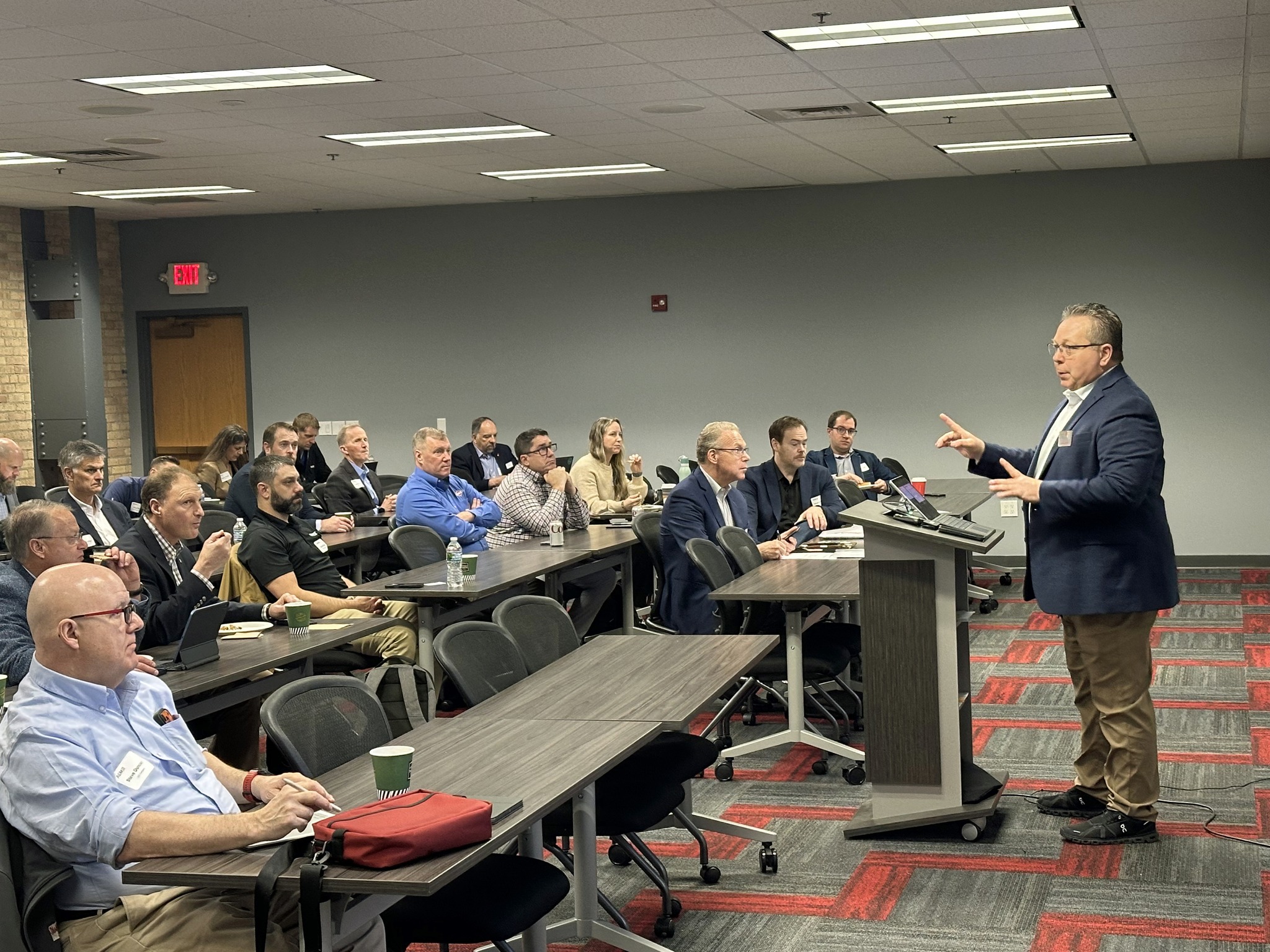
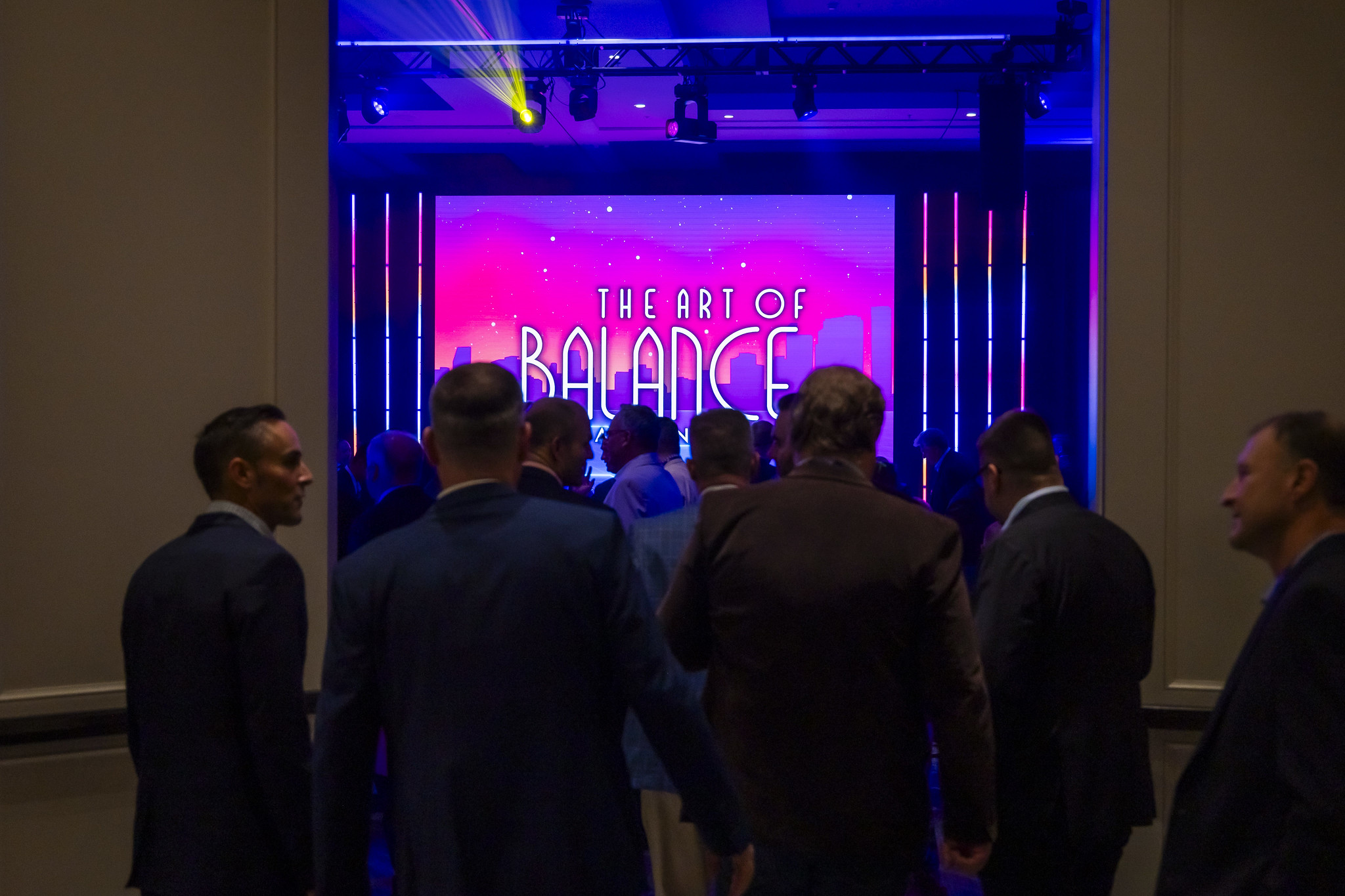
Mauri served as the keynote speaker at AEM’s 2025 Annual Conference in November. He discussed two common tracks companies take when facing disruption and uncertainty:
- “The Panic Zone” -- Where decision-making is driven by anxiety, often without a clear strategy in place
- “The Complacency Zone” -- Where minimal preparation is taking place and, thus, a company’s readiness to adapt is extremely poor.
While neither of those two mindset zones is ideal, the Complacency Zone is particularly dangerous. Mauri said companies often find themselves in a precarious position when legacy ways of thinking persist, even though they are grossly outdated.
How can company leaders begin conquering their complacency and looking towards the future with confidence? Mauri said a third zone is needed, “The Education Zone.”
“Today’s leaders need a willingness to learn at the speed of future,” Mauri said. “But at the same time, they need a willingness to unlearn outdated things of the past.”
Join AEM member company executives and the next generation of industry leaders at the 2026 AEM Annual Conference, set for Nov. 10-12, 2026, at the JW Marriott Tucson Starr Pass Resort & Spa in Tucson, Arizona. To learn more, visit aem.org/annual.
“Cultures of curiosity embrace ideas that challenge the status quo. Companies can’t win the future without all their teams using their brains expansively. Agility is the new stability today.” -- Terence Mauri
4 Questions for Leaders to Ask Themselves
To begin conquering their complacency, Mauri said company leaders should ask themselves the following questions.
- How can we make things less risky for our company?
- How can we make things less complex?
- How do we become the company we wish we would have invested in five years ago?
- How do we turn megatrends like autonomy into milestones?
In answering these questions, Mauri said company leaders must be willing to adapt continuously. They also cannot fear change and new ways of doing things.
“Momentum beats perfection today,” he continued. “Companies should also stop viewing setbacks as defeats. Setbacks provide an opportunity to collect data and learn.”
To that end, companies need cultures of curiosity, as opposed to cultures of conformity.
“Cultures of curiosity embrace ideas that challenge the status quo,” Mauri said. “Companies can’t win the future without all their teams using their brains expansively. Agility is the new stability today.”
Bloated With Bureaucracy?
In an effort to reject complacency, embrace curiosity, and amplify agility, companies must take an honest look at what Mauri refers to as their “BMI.” No, that doesn’t mean body mass index. In the business context, BMI stands for bureaucracy mass index. But like the original BMI, this one seeks to identify companies that may face health risks from being bureaucratically overweight.
“It has never been easier for employees to waste time,” Mauri said. “The typical person works around 2,100 hours a year, and 700 of them are wasted on broken practices and other BMI. Leaders should go back to their teams on a quarterly basis and ask what needs to be detoxed, decluttered, or outright deleted. When you remove BMI, you give people the empowerment to focus on meaningful, innovative, values-driven work.”
Mauri said data suggests that 20% of a company’s processes can be automated, augmented, or completely eliminated thanks to AI. That said, technology alone can’t solve BMI. In fact, technology could make things worse if implemented incorrectly. That is why Mauri stresses that the future is as much about mindset and culture as it is about technology.
Mauri said there are several questions leaders can answer to get a feel for their company’s BMI:
- How many layers are there from frontline employees to the CEO?
- How much time is spent on meetings, preparing reports, etc.?
- How much does bureaucracy slow down decision making?
- To what extent are managers focused on internal issues like resolving disputes, obtaining approvals, securing resources, etc.?
- How much autonomy does an individual team have to set goals and priorities?
- How are frontline employees involved in the design and development of change initiatives?
- How do people react to unconventional ideas?
- How easy is it for frontline employees to launch a new project that requires a small team and some seed funding?
- How often do political skills, as opposed to demonstrated competence, influence who gets ahead in the company?
Is the Company Committed to Transformation?
Even when leaders recognize it’s time to shed BMI and cement a culture of curiosity, additional effort is needed to make sure everyone from the frontline to the C-Suite is aligned with the mission.
Sometimes, however, the level of alignment varies amongst the employee base. Mauri said he worked with a smaller manufacturer where just 30% of employees were fully aligned with the company’s top five strategic priorities. He also found that the more senior-level staff tended to overestimate the company’s overall level of alignment. But when frontline employees aren’t aligned — and leadership is somewhat out of touch — a lot of time and resources can be wasted on ineffective execution.
Mauri suggests that company leaders ask themselves another series of questions:
- Does our company have clearly defined strategic initiatives?
- Is there a shared sense of what our company will look like in 5-10 years?
- Does our culture encourage exploration and experimentation?
Armed with the answers to those questions, leaders can begin identifying specific actions to help drive improvement.
Mauri also cautioned against the following characteristics that can render a company incapable of transformation:
- Employees spend too much time on nonmeaningful work
- “Zombie leadership” results in employees that are overmanaged, but under-led
- Both frontline employees and leaders alike continue to act with yesterday’s logic, assumptions, and mindsets
“Internal complacency is far more dangerous than external disruption today,” Mauri noted. “To move from thinking different to actually acting differently, leaders must prioritize it and protect it like revenue. Leaders must acknowledge the power of conversation that inspires people to think hard. In times when uncertainty is high and disruption is the norm, the biggest risk is doing nothing.”